Introduction:
Managing a large, complex facility like a hospital is a massive challenge. When a client, a construction manager from a prominent Swiss hospital, approached us, they had a clear goal: to streamline their facility management and ensure seamless operations for decades to come. Their problem was common: all their building data was locked in outdated PDFs and blueprints. This is a huge risk, as facility management tasks become inefficient, and critical information can be lost. Our task was to transform their traditional documentation into a smart, usable BIM model.
The Client’s Challenge:
The construction manager needed a solution that would go beyond a simple 3D model. They required an accurate, data-rich digital twin that could be integrated into their facility management platform, Dalux. They needed a model that was structured and organized in a way that made sense for asset tracking, maintenance, and future renovations.
Our Solution: A Data-Centric Approach
We approached this project with a strong focus on the client’s end goal. We used a multi-step process to ensure the final product was not just a model, but a valuable asset.
- Modeling from Existing Plans: Our first step was to take the client’s existing PDF plans and model the hospital in Revit 2024. This required meticulous attention to detail to ensure every wall, door, and room was accurately represented.
- Adding Intelligence with EBKP-H Classification: The most critical phase of the project was adding intelligence to the model. We classified all elements according to the EBKP-H (BauKostenplan Hochbau) standard from CRB. This provided a uniform structure for all building components, making the model easily searchable and organized for cost management, maintenance planning, and reporting.
- Ensuring Quality with Collision Checks: Before delivering the model, we conducted a thorough clash detection to identify any potential conflicts or inconsistencies within the model. This ensured the client received a clean, reliable model that would integrate seamlessly into their workflows.
- Delivering for Dalux: The final model was prepared specifically for upload to Dalux, the client’s chosen facility management platform. This final step guaranteed that the hospital’s team could immediately begin using the digital twin for their day-to-day operations.
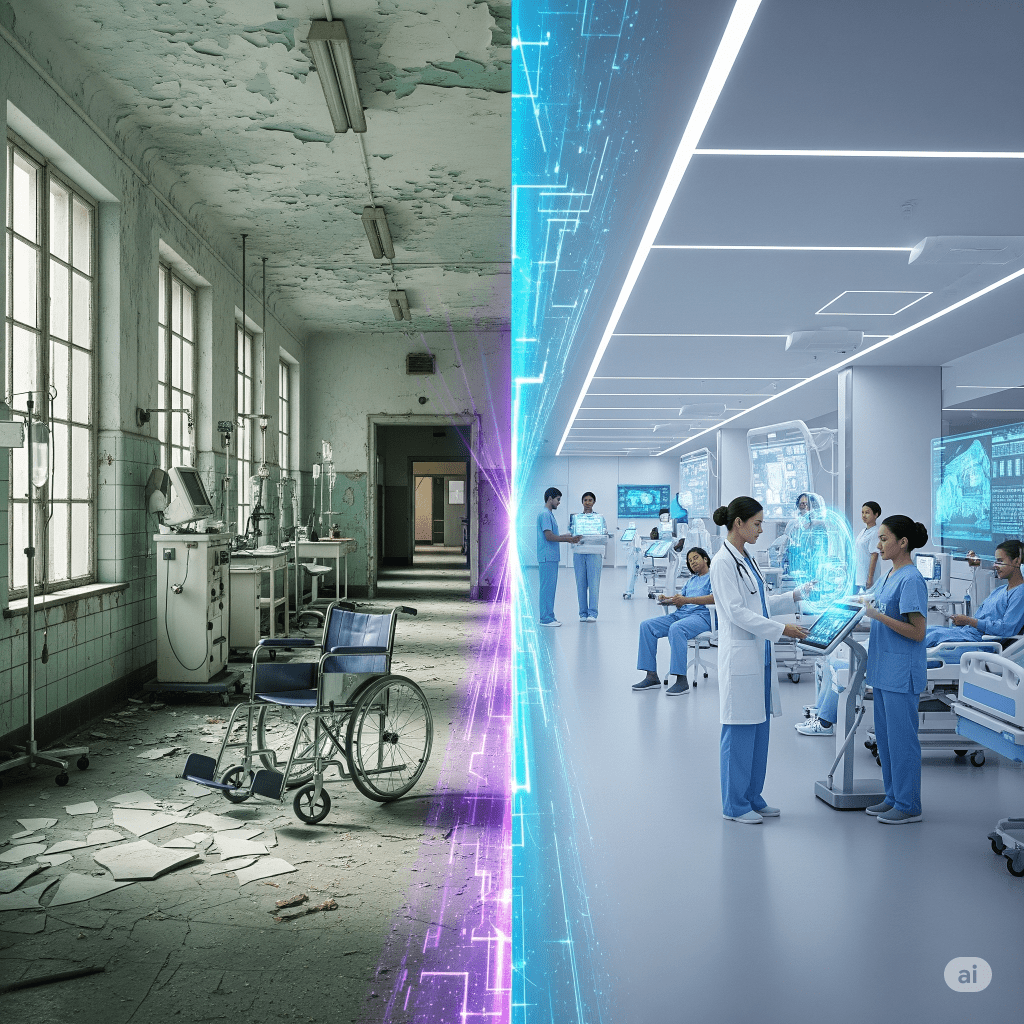
The Result: A Future-Ready Hospital
The project delivered a tangible outcome for the hospital’s construction manager. The new model provides them with a complete, data-rich digital twin of the building. This asset will enable them to:
- Streamline Maintenance: Quickly locate assets, access specifications, and track maintenance records.
- Improve Efficiency: Reduce time spent searching for information in outdated PDFs.
- Reduce Risk: Ensure accurate data is always available for future projects and emergencies.
By focusing on the client’s problem and delivering a precise, client-specific solution, we were able to provide a service that will benefit the hospital for years to come. Our work was not about converting a file; it was about empowering the client with the data they needed to succeed.
Have a project with outdated plans or point cloud data? Send us the details and get a customized quote for your BIM project.

 construct-era
Leave a comment