Introduction:
Historic buildings are more than just structures; they are a link to the past. But for the professionals responsible for their future—like the surveyor and architect on this project—they present a unique challenge. Their existing plans were limited, and they needed a solution that would allow them to plan for modern additions like toilets and elevators without compromising the castle’s historic integrity. Our mission was to provide a digital twin that was not only accurate but also a powerful tool for informed decision-making.
The Client’s Challenge: Modernizing History
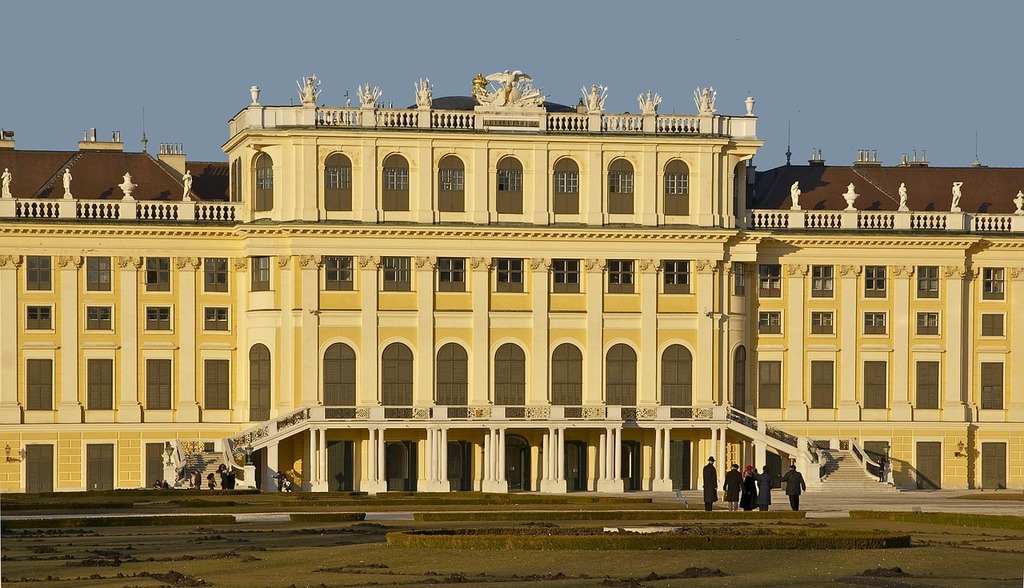
The architect and surveyor’s objective was to seamlessly integrate new, essential facilities into the castle while preserving its original character. The castle, with its intricate rooflines, unique facade, and detailed stone elements, presented several key challenges:
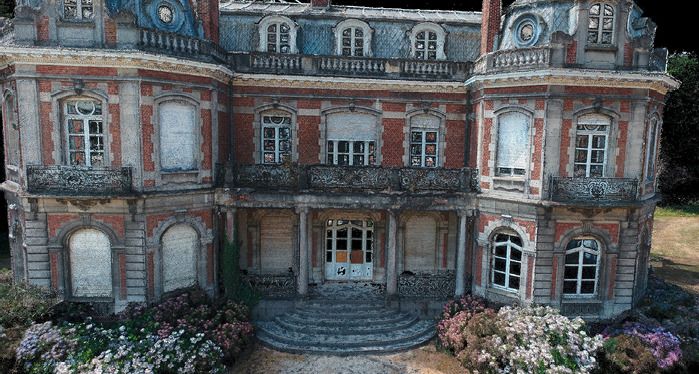
- Intricate Details: The roof was not a simple structure; it was a complex blend of angles and curves. The facade was adorned with a variety of decorative stone elements near the windows and balconies, each with its own unique form.
- Physical Imperfections: Unlike new construction, the existing structure was not perfect. We needed to model the facade with a high degree of accuracy—down to a 5mm tolerance—to reflect its true, asymmetrical nature. This level of detail was critical for the architect to assess how new elements would fit.
- Visualizing Change: The architect needed to see exactly how new additions, such as elevators, would impact the facade’s appearance. The standard 2D plans weren’t sufficient for this kind of visual and aesthetic analysis.
Our Solution: Precision Modeling for Preservation
Our approach was to create a digital asset that was a faithful replica of the existing building while also being a flexible tool for future planning.
- Meticulous Modeling: We modeled the entire building in Revit 2024, with particular attention to the complex roof and facade. Every decorative element was meticulously recreated, and we created custom Revit families for the windows to ensure each one was true to the original design.
- Phase-Based Workflow: To provide a clear distinction between existing and new work, we modeled the castle in the “Existing” phase. This allowed the architect to then model their new construction elements in a separate phase, making it easy to see and analyze the proposed changes.
- A Model for Deeper Analysis: Our BIM model was more than a static image. The architect used it to conduct a cultural study to understand the impact of the new additions. It also provided a foundation for potential future energy and cost analyses, proving that a smart BIM model is a long-term investment.
- Visualizing the Future: The 3D model allowed the client to realistically assess how the proposed elevators would affect the castle’s facade. This visual feedback was invaluable and helped them make confident, design-conscious decisions that honored the building’s historical significance.
Conclusion: A Blueprint for the Castle’s Future
By delivering a precise, data-rich digital twin, we provided the surveyor and architect with the tools they needed to bridge the gap between historical preservation and modern functionality. The BIM model allowed them to make informed decisions about adding new facilities and confidently plan a future for the castle that respects its past.
 construct-era
Leave a comment